Friday, March 09, 2012

SOF under CIA authority?


As Duckworth explained down below and we discussed in class on Wednesday, SOF has become a major part of US military operations. The AP reported this past week that according to sources, top Department of Defense officials were considering a plan in which special operators would be placed under CIA command in Afghanistan following the US's 2014 exit. In the original story a Pentagon spokesman denied that this was under consideration. In a follow-up story, the head of SOCOM Admiral William McRaven also stated that no such plans were in the works.

Of course, manipulating the status of special operators is not unheard of. The bin Laden kill team was placed under the control of Leon Panetta and the CIA on the night of the raid due to the restriction on US military in Pakistan and CIA operators themselves were on the ground acting as spotters for the SEALs and Night Stalker pilots. The intelligence community and SOF have increasingly worked together to hunt down al-Qaeda members.

If these are the plans, and it seems plausible considering the widening use of SOF in the War on Terror, McRaven and the Pentagon certainly would not be frank about it. The US would essentially be turning its uniformed military into spies. This could have complicated legal ramifications since uniformed soldiers are protected under the Geneva Convention while the CIA is not. Also, the military and the CIA operate under different titles of the US code, so there would be legal gray area about what SOF under CIA authority would be required to report to Congress.

As the US continues forward in its global hunt for terrorists, expect the wall separating the activities of SF commandos, CIA operatives, and paramilitary contractors to become thinner and thinner.

Tuesday, March 06, 2012

Is Israel All Talk or Can They Back Up the Rhetoric?


      Israel is in the news again with Prime Minister Binyamin Netanyahu discussing the possibility for an independent Israeli strike against the Iranian nuclear problems; even in spite of protests from other world leaders, including those of the United States. Netanyahu stated other instances where Israel made policy decisions without the support or acquiescence of the United States, while in a meeting with congressional leaders. One of the major reasons for this comes from Israel feeling closer, and more vulnerable, to the actions and threat of the Iranian nuclear program. 

      Both parties in the United States government eschewed promises to support Israel and the staunch support that policy would continue to be enforced to hinder Iran from gaining nuclear weapons or nuclear capabilities. Speaker John Boehner commented that the United States will never let Israel stand alone. That being said, United States officials call for care in handling the situation in Iran. There is a valid fear that any misstep can lead to unforeseen and disastrous problems in the region. To that end, the government calls for Israel and the United States to be clear with Iran, and not seem divided on a plan of action.
Ya’acov Amidror, head of Israeli National Security, stated that the leaders needed to return to Israel and consider what the other world leaders have said. He stated that during the meetings with American officials both sides were able to come together and understand each others positions. Also, Amidror reinforced Netanyahu's statement that Israel will do whatever necessary for the continued defense and growth of Israel. To this end, these men spoke during the American Israel Public Affairs committee Policy Conference and used historical rhetoric, mainly the holocaust, to defend the ideas of attacking Iran to secure a future (for Israel) free of nuclear threat from Iran. 

      While all of this is occurring, there is political pressure from Israel for Prime Minister Netanyahu to reduce the aggressive rhetoric and the call to violence, and comply with the United States' policies when dealing with Iran. Of course, the Israeli people are worried about retaliation; and are ill prepared to deal with the level of retaliatory attacks by Iranians and Muslim extremist groups. While this is a fear, it is not the major reason that Israelis push for less aggressive actions. Many fear that an attack would lead to another world recession; and that Israel would get blamed for this recession on a global level. They fear that this action will reduce already shaky support for the Israeli nation and plight. On top of this, many Israelis fear that such an action will lead to a strenuous relationship with the United States, Israel's largest ally, during the upcoming presidential elections. A number of former military leaders have come out to state how Netanyahu's stance on the issue is actually hurting Israeli morale and standing in the world stage.

     Considering these factors presents a number of considerations when considering the national security and defense of the United States. As stated above, there is a major connection between the United States and Israel, and any attack on Israel's part is likely to draw the U.S. into military actions against Iran. As it stands right now, the United States is ill equipped to enter into another war; especially on such a grand scale as would be required in the invasion of Iran. While the American military could dominate the Iranians, the costs would be more than the United States can afford; both in terms of manpower and monetary considerations. 
     
      That being said, another concern surrounds the point made by Israeli citizens about the upcoming political situation in the United States. With the Presidential elections on the horizon, there needs to be a hesitancy for any long term military action. Firstly, and most importantly, any such action creates a debate among the two candidates that translates into the appearance of fracturing and weakness on the world stage. If this happens during the debates, the American resolve could be seen as weak and another action such as 9/11 could happen in the hopes of breaking the American peoples' willpower and support of the war. Along with this, comes the question of adapting the grand strategy of two quite different candidates to encompass any military action against Iran. There is the chance that the winner of the next presidential election takes a completely different position and shifts policy on the Iranian situation. If this occurs while military actions are being carried out, then once again there is a major risk for the United States to be perceived as weak and unwilling to follow through. This could lead to a loss of respect, or fear, on a global scale that would have detrimental effects to the defensive power and threats of the American government and military.

Sources
Oak Tree on White House Lawn Reports: BHO + SOF 4-ever


Special Forces are awesome.  That’s pretty hard to deny.  Movies showcase how absolutely inferior the average American is to Special Forces commandos in every single quantifiable measurement related to awesomeness.  Some of the most popular videogames, from SOCOM to Call of Duty, allow us to pretend to be awesome by way of playable avatars.  Literary characters like Jason Bourne show us that books are not only brutal weapons for fighting would be assassins, but also mediums for living vicariously through awesome fictional special operatives.  There is not a whole lot of reason to really question President Obama’s fascination with the Special Forces. 

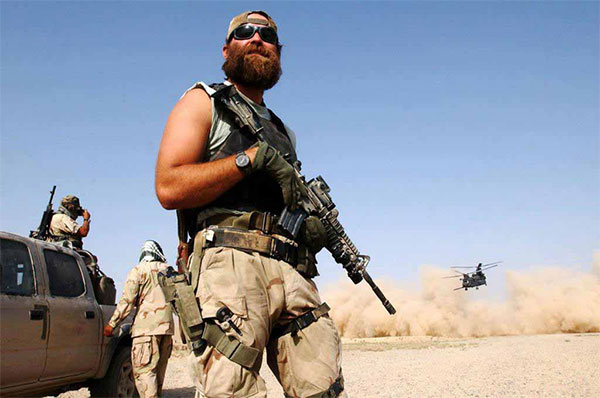
Recent articles by The Diplomat, Newsweek, and other sources have highlighted growing reliance on the US Special Operations Forces, including Navy SEALS, Army Green Berets and Rangers, and the Marines.  Everyone knows about Seal Team Six’s successful Bin Laden raid and their amazing sea sniping skills.  Less known is that in October of 2011, President Obama announced that up to 100 Green Berets would be sent to Uganda to help train regional forces to combat murderous rebel groups like the Lords Resistance Army.  Or that in January of this year, Special Operations Forces rescued two hostages and kill nine Somali pirates in a nighttime helicopter raid.  According to ridiculously named pirate witness Bile Hussein, “The raiders came in very quickly, catching the guards as they were sleeping after having chewed the narcotic leaf qat for much of the evening.”  Awesome.

As their use and success rate continues to climb, the Obama Administration and the Pentagon have indicated that the draw down in conventional forces brought on by political and budgetary considerations will likely be offset by an uptick in SOF related missions. In fact, the USS Ponce, a decommissioned 40-year-old battleship, is currently being retrofitted to act as a floating “mother ship” to deploy SEALS, Rangers, and other special forces in the Middle East, as necessary.  This awesome mother ship of awesome commandos jumping on fast boats and doing things that are awesome really only exposes the tip of a very awesome iceberg though.  The Pentagon is reporting that it plans to build dedicated floating bases in a number of strategic regions to help facilitate and coordinate Special Forces operations by 2013.

From a purely logical standpoint, the transition towards Special Forces makes practical sense.  The American populace is generally uneasy when it comes to full scale, brute force destruction, and the loss of human life that generally accompanies it.  Thus, the surgical precision of Special Forces showcases the US as not only the most powerful military force on the planet, but the best trained, capable, and humane. 

Some have urged President Obama to exercise caution in his use of Special Forces though.  Retired Lt. Gen. Dave Barno, of the Center for New American Security, says that the emphasis for the SOF should be “quality, not quantity,” and that SOF resources can easily become overstretched. “Its manpower has nearly doubled, its budget has nearly tripled, and its overseas deployments have quadrupled,” reports Barno.  Furthermore, an article last week in the Washington Times interviewed an unnamed spouse of a special operations member, who lamented that “the pace of deployments for the past decade has been relentless… and it has taken a toll on both of us and certainly on our marriage and on his relationship with our children.”

While the use of SOF rightly represents an extremely important facet of future American military planning, President Obama stands in a precarious position.  Plans to add 8,800 SOF troops over the next four years (2,500 this year, 2,300 in 2013, and 2,000 in 2014 and 2015) will actively strengthen our stock of mission capable specialists, but there exists a real risk of diluting its strength in exchange for numbers.  President Obama and all future leaders will need to guarantee that US SOCOM continues to create the most feared deployable commandos in the world, if they hope to use them to their full advantage.  In the meantime, many, including this author, often confuse fact and fiction when it comes to the awesomeness of our special operatives.  While I’m sure plenty of SEALS, Rangers, and Marines share many qualities of Dutch from Predator, the rest likely are affected by battlefield fatigue and stresses from home.  I love reading about helicopter raids on shanty pirate forts as much as the next person,  but like tennis elbow, over use and under preparation can have detrimental effects on your game.

To kill, or not to kill...


In the most elaborate public explanation yet concerning American drone operations, US Attorney General Eric Holder condoned the killing of American citizens abroad in a speech given at Northwestern University on Monday. Holder stated that the American government had the right to order the killing of any American citizen living abroad if they “posed an imminent terrorist threat and cannot reasonably be captured.”

Noteworthy highlights include Holder speaking upon due process and Fifth Amendment rights, saying that a thorough executive branch review of the facts of a case was a person’s due process, and that a citizen’s Fifth Amendment rights does not necessarily mandate an actual judicial process. He stated that when “national security operations are at stake, due process takes into account the realities of combat.” He also claimed that United States has, and will continue, to operate within the laws of war by “ensuring the target is genuinely participating in hostilities and that collateral damage is not excessive.”

As per usual, this government declaration contained vague language in which many loopholes could be created and justified. Like Bush’s term “enemy combatants,” the phrase “imminent terrorist threat” could entail a wide array of things, and thus grants government officials a substantial amount of freedom in deciding whom they want to accuse. Holder stated that there was a set of critical factors that are considered before action is decided upon, including “the relevant window of opportunity to act, the possible harm that missing the window would cause to civilians and the likelihood of heading off future disastrous attacks against the United States.”

Holder’s public statement is extremely significant, since the government’s classified drone program is not exactly widely discussed and acknowledged by the government. The interagency effort was meant to provide a public explanation of the legal framework in hopes that slightly more government transparency concerning the program would be beneficial. Although the efforts at transparency should be acknowledged, it is hard to imagine Holder’s speech swaying the critics of the drone program. The speech did relatively little to assuage the worries of critics that the American government is granting itself broad authority in killing those whose security they are supposed to protect. However, the Obama administration has been extremely successful in past drone strikes in eliminating terrorist threats, and although the constitutionality of killing American citizens can be debated, the effectiveness of the campaign or the merit of the targets previously chosen can hardly be argued from a national security/defense standpoint.


Sources: Peter Finn, Sari Horwitz. "Holder Says U.S. Has Rigth to Kill Terrorist Citizens Abroad." The Washington Pose 6 March 2012: 3.

Sunday, March 04, 2012

The Nukes We Need... To Stay Away From.


In Keir A Liebers' and Daryl G. Press' The Nukes We Need, they make an argument for the application and development of tactical nuclear weapons. Liber's & Press' argument rests on the position that using tactical nuclear weapons adds to the credibility of our nuclear arsenal, and thus increases the U.S.' power to deter aggressors. This argument is flawed in many ways.


First, they make the argument that in conventional wars against powerful U.S. adversaries, we will use nuclear weapons because of the existential threat. However, these authors ignore the fact that the deterrence we have already established has halted these great power wars. The U.S. and China have not fought, the U.S. and Russia have not fought, Russia and China have not fought and so on. Why do we need to develop tactical weapons, as a means to hit counterforce targets, if these wars do not begin in the first place?


Secondly, the use of tactical nukes will have the opposite effect of deterring aggressors and nuclear war. They will in fact increase nuclear wars because other states will believe we are more likely to use them. The very argument that Lieber and Press lay out in arguing for tactical nukes "that we would actually be more likely to use them" is the at the heart of the counter argument. The nuclear threshold will likely be lowered and we will see tactical nuclear weapons employed more often.


Third, and most troubling is their position that a tactical nuclear attack is vastly different from any past nuclear attack. Once the nuclear threshold is past, the nuclear threshold is past. Are powers likely to respond more benignly if we insist that we only dropped a tactical nuclear weapon on them? The enemy may not respond in kind and still deploy a devastating second strike. Finally, tactical nukes, while having left radioactive fallout, still have radioactive fallout. Thus, these weapons are more moral than larger nuclear weapons, but cannot claim complete moral superiority.

Finally, tactical nuclear weapons do not have capabilities that differ from conventional weapons the U.S. now possesses as much as they would lead you to believe. U.S. weaponry has become increasingly sophisticated, lethal and accurate. We can handle many of the potential dangers that Lieber and Press speak about without crossing the nuclear threshold. Some argue that hardened missile silos or complex arsenals located in mountains and caves may call for a tactical nuclear weapon. Again though, this is a nuclear strike and perhaps a pre-emptive one at that. Bunker buster missiles are more apt to handle the problem without the international condemnation of nuclear use. Can the United States lead the world in non-proliferation when developing nuclear weapons that are more acceptable to use? I think not.

Overall, tactical nukes pose no benefit when compared against strategic nuclear weapons and conventional weapons. The development of these tactical nukes will lead to more nuclear use, not a greater deterrence. Lieber and Press must understand that crossing the nuclear threshold is not relative. Once you detonate a nuclear weapon, it does not matter if you crossed that nuclear line by 50 ft (tactical) or 100 ft (strategic).


Thursday, March 01, 2012

“Israel’s Last Chance” is Too Little, Too Late


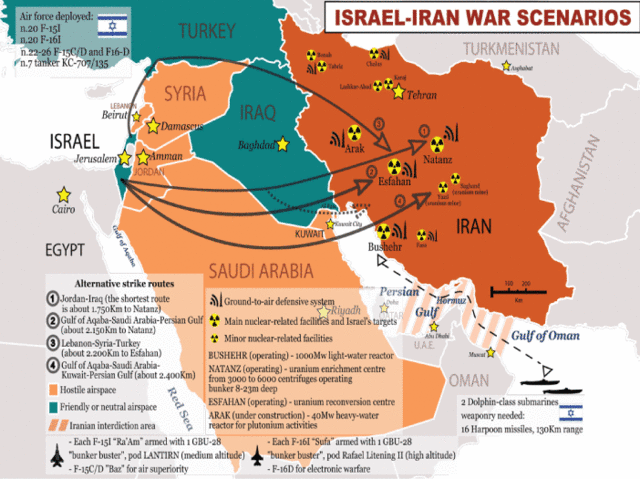
In yesterday’s New York Times, the director of Israel’s Institute for National Security Studies and the former head of Israel’s military intelligence wing, Amos Yadlin, makes the case that if America does not give Israel a sure guarantee that it will strike Iran’s nuclear sites, Israel will be forced to act before its window of opportunity has passed. To make this case, Yadlin drums up the frightening specter of a Mid East nuclear arms race, as well as highlighting Israel’s previous achievements at surgical strikes against Iraqi and Syrian nuclear research facilities in 1981 and 2007, respectively. These past successes are equated to this new potential endeavor as both impossible tasks that were overcome by Israeli gumption and ingenuity. Such comparisons, while superficially pertinent, fail to meet muster when examined more closely.
First of all, the distance that Israel would be required to cover far outstrips the distance to Iraq’s Osirak reactor. This therefore, would require mid-flight refueling as well as additional fighters for protection of the tankers as laid out in a Feb. 19, 2012 analysis by Elisabeth Bumiller of the New York Times. In addition, the anti-aircraft capabilities of the Iranians are nothing to sniff at. When considering the potential targets’ deep entrenchment and fortifications, as well as the precision necessary by Israelis to  successfully destroy these sights, it wouldn’t take much for the Iranian air defenses to thwart an Israeli airstrike. It quickly becomes apparent that even under the best of circumstances, this proposed ‘surgical’ airstrike will be an aerial fiasco waiting to happen.
Finally, there is the question of Iranian commitment to its nuclear program. Yadlin would have us believe that, like Iraq and Syria, the combination of one strike followed by aggressive sanctions will be enough to deter Iran from resuming nuclear development. I find this hard to believe. Iran’s desire for nuclear arms goes back to the latter years of the shah. 30 years of commitment that crosses all ideological lines within Iran suggests that a strike will not deter Iranians, even during austere times brought on by tough sanctions. Rather, it’s more likely such an attack will galvanize support for the regime.
Yadlin seems to be suffering from the delusion that the Israeli Air Force, given enough time to plan, can move mountains. Yet the reality is that Israel suffers from the same logistical constraints of any mid-sized military. We are in the endgame in regards to Iran’s nuclear quest, and it’s about time Israel recognizes this fact, and starts planning for what comes next.

Saturday, February 25, 2012

Perception is Power


Under the belief that Iranian leadership is willing to pursue to a foreign policy that includes wiping its enemies off the face of the earth, a number of states in the West and Middle East have become restless at the thought of a nuclear Iran. From this perspective, the possession of nuclear arms would instantly transform Iran from a pariah state, into a regional hegemon that could use threats of nuclear warfare to bully its neighbors into reluctant compliance. Seemingly unfazed by international pressures, Iran appears determined to continue to develop its nuclear capabilities, whether for domestic or military use, no matter the cost. If possessing nuclear weaponry provides a gateway for additional power and international recognition, it would be irrational for Iran to cease its behavior even in the face of economic sanctions and widespread condemnation. But, is the benefit of nuclear capability really worth the ever-increasing price tag? 

Although nuclear arms have the potential to create extensive physical and psychological damage, the procurement and maintenance of weapons is both time-consuming and resource-intensive. Generating an extensive stockpile of nuclear warheads may increase a state’s military capabilities on paper, but at the expense of monitoring and storing technology that becomes increasingly obsolete each passing day. An alternative to a mass buildup of arms is to instead focus upon the creation of small, tactical weapons that can be used for small-scale operations, but maintain the frightful guise of “weapons of mass destruction”. Nevertheless, in the case of Iran, it is not the size or strength of its arsenal that worry the international community, but the mere possession of the technology and capabilities to create nuclear arms. 

Yet, without a nuclear attack since the back-end of WWII, the need to actually develop and construct nuclear arms is quickly becoming less of a necessity. In the case of Iran, it has oft been considered an international menace and military threat despite the lack of evidence that it possesses or has even pursued the proliferation of nuclear weapons. Instead, Iran has gained credibility through its ability to create doubts and confusion about its desires and pursuits, an achievement coined “strategic ambiguity”. By keeping its true intentions hidden, the Iranian state could potentially develop nuclear technology and gain recognition as a member of the “nuclear club”, without the costly measure of truly creating a single warhead. Although the risk of a nuclear facade may be worth the reward in the short-term, it is difficult to say how long the international community is willing to fear an Iranian state without proof that its bite matches its bark.

Tuesday, February 21, 2012

This Week in Misleading Headlines: China Steps up Anti-Piracy Campaign


In what has been a retreat from their fairly rigid policy emphasizing the importance of sovereignty and non-intervention, China has conducted limited anti-piracy operations in and around the Gulf of Aden since 2008.  With the recent announcement in the Liberation Army Daily that 84 leading naval commanders will undergo further specialized training in anti-piracy operations, China has cemented its commitment to combating piracy, while also tacitly signaling its intentions to further increase its maritime power.  China is effectively killing two birds with one stone: satisfying its domestic/economic interests while also parading its new found military power to the international community.  Operating under the guise of anti-piracy, China will not only secure its vital shipping lanes and interests in the region, but will showcase its ability to conduct and sustain naval operations far from their coastal waters in a relatively benign theater. 

While Chinese efforts to combat piracy are generally seen as a favorable step towards Chinese integration into the world stage, not everyone is totally pleased with these developments. Since beginning their limited anti-piracy operations in 2008, the Chinese Navy has dramatically increased its competence in a variety of blue-water capacities, including sea logistics, replenishment, satellite communications, and command and control, according to US Naval analysts.  Combined with strong littoral defense capabilities honed in its more traditional role protecting domestic coastlines, and an extensive naval upgrade that includes new destroyers, submarines, and a refurbished aircraft carrier purchased from Ukraine, the Chinese appear to be continuing their evolution into a maritime presence capable of complicating US Naval dominance in the immediate future. 

The larger implications of this rise for US Naval planners remain to be seen though.  China’s increasing ability to conduct operations in multiple theaters certainly complicates matters for strategists, and its capacity to restrict access at greater distances could prevent coordination of response, should an international event take place in the region.  However, China has given no indication that it will challenge US Naval dominance in the regions the US deems strategically significant, and joint anti-piracy efforts remain one of the best opportunities to engage with Chinese military personnel in productive areas.  Thus, while strategists must plan for a capable Chinese Navy in the future, current operations around the Horn of Africa may be the best opportunity to enhance cooperative understanding and achieve mutual goals.     

Sunday, February 12, 2012

If Presidential Bid Fails, Santorum Could Have a Future Installing Glass Ceilings.


Rick Santorum recently spoke out against women participating in military combat. In a reverse of protocol, the Pentagon announced plans to permit women to work in combat battallions in roles as interrogators, medics, radio operators and so forth. The professional progression of women within the military, while still behind modern societal expecations, is advancing. Santorum disagrees with this direction of military affairs.


Santorum stated that he believes that "emotions" may take over in the heat of battle and jeopardize a mission. "When you have men and women together in combat, I think men have emotions when you see a woman in harm's way, I think it's natural. It's very much in our culture to be protective.", states Santorum. Thus, a military's operations will be threatened due to these pesky women who seem to find themselves in danger and need being saved.


Santorum's remarks are missing in critical areas. He ignores the idea of the military being professionally trained. There has been, is and will always be an emphasis to think rationally and not emotionally. Second, humans have a "natural" inclination to save each other in combat. The creed "no man left behind" resonates throughout military history, yet, "no woman left behind" seems to sow chaos within a military operation. Third, if a woman sees a man being threatened, would she not be capable of helping him in the military? Do we not want our soldiers acting in defense of their brothers and sisters? To add salt to the wound, Santorum talks of "all sorts of physical issues" that cause him worry when considering women in active-combat role, while over 75% of Americans support women in combat roles. These are vital issues that reverberate thoughout our politics, culture, military, society and world. We can only trust this decision to a capable party: Do no worry women, these decisions are not yours to make, Santorum will do it for you.


  1. http://abclocal.go.com/wtvd/story?section=news/national_world&id=8539750

  2. http://content.usatoday.com/communities/onpolitics/post/2012/02/rick-santorum-women-in-combat-emotions-/1

  3. http://www.washingtonpost.com/blogs/compost/post/rick-santorum-and-those-emotional-women/2012/02/10/gIQAKpqF4Q_blog.html

Tuesday, February 07, 2012

There's no place like Homs, there's no place like Homs...


Can there be a happy ending in Syria somewhere over the rainbow?

On Anderson Cooper 360 last night, Anne-Marie Slaughter suggested there were only three routes for the international community to take regarding the Syria crisis.

1) continue doing nothing, which she thinks is certainly plausible
2) arm Syrian rebel groups so that they can fight back, which she believes is the most likely option
3) Turkey+other neighboring countries in the area get involved militarily, which she thinks is possible but not likely

Of course, this is assuming the actions of Russia, which lacks the heart to intervene, and the US, which lacks the courage to intervene on its own, don't change sometime in the near future.

With the flood of horrific images being uploaded onto Youtube each day, it's getting more and more difficult for outside countries to stand around and continue doing nothing. The number of victims in Syria has reportedly reached over 6,000 and the government has no intention of ending the violent crackdown on protesters any time soon.[1]

The US is very unlikely to do anything bold on its own. The current administration is focused on trying to get re-elected this fall and probably feels that US military intervention in the region (after Iraq and Libya) would not be looked favorably upon by the American public. If America decides to act at all, it will be through a multilateral effort, but this is impossible since Russia and China vetoed the latest UN Security Council resolution for the international community to respond.[2] The American embassy in Damascus also closed yesterday due to the situation, which makes US diplomatic intervention even more unlikely.[3]

But perhaps things in Syria could change for the better....A Russian envoy recently arrived in the country to meet with Al-Assad.[4] Foreign Minister Sergei Lavrov made several remarks that Russia was very concerned with the situation and disturbed by the amount of bodies that cannot even be identified. If any country has the diplomatic clout and influence to force a change in Syria, it is Russia. Besides, Russia could really benefit from being a force of positive change in the Middle East, a region in which it has fading influence.

Hopefully Turkey, the scarecrow of the bunch, will realize how dangerous a politically unstable Syria is to its national security.