Sunday, March 02, 2014

Did American Defense Statecraft doom Ukraine?

To anyone who follows world events, saying "Ukraine is currently a hotbed of activity" would be the understatement of the year (so far).  Within the last few days, events have taken more critical turns.  After months of protests, the Ukrainian Prime Minister Mykola Azarov resigned.  Repressive anti-protest laws were quickly repealed in attempts to mollify the destructive crowds, then issued a warrant for Azarov's arrest.  Azarov vanished shortly thereafter.


This prompted Russian Prime Minister Dmitry Medvedev to proclaim Ukraine's acting government as illegitimate, while Russian President Vladimir Putin on claimed that all foreign intervention in the country was "adding to the unrest in the former Soviet republic."  


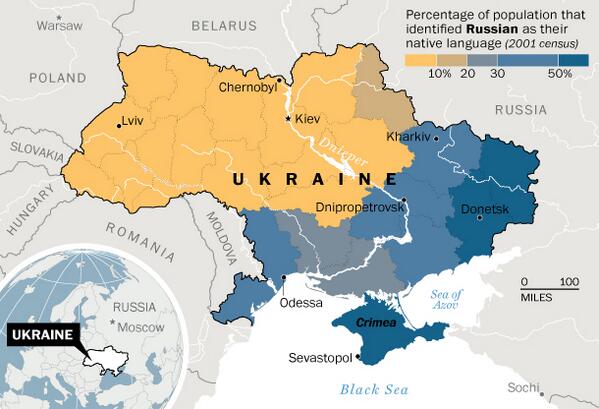
Now, it appears as though the Russians are planning to invade, or have already done so (as suggested by the presence of heavily armed, unidentified military personnel after the Russian parliament voted to intervene).  In response, Ukraine is mobilizing its army to counter the perceived "declaration of war."  Complicating this mobilization effort is the fact that the Ukraine is an intrinsically diverse country, as evidenced by the apparent defection of the Ukrainian Naval Chief and the Ukrainian naval flagship to the side of pro-Russian forces in the Crimean Peninsula.

The Hetman Sahaydachny, the Ukrainian Frigate in question

Events have certainly shown that the Russians can still "catch the world off guard."  So where did the international community go wrong?  More specifically, where did the United States go wrong?  And how does American Defense Statecraft fit into the mix?

The failure of American Defense Statecraft to dissuade Russian intervention in the Ukraine can easily date to 2008's Russo-Georgian War.  In response to that Russian incursion into a bordering nation, the international reaction was rather tepid, with then-President Bush saying "Bullying and intimidation are not acceptable" in the 21st century.  Aside from political bluster and grandstanding, nothing much happened.  After the use of chemical weapons in the Syrian civil war, President Obama bungled his way through threatening involvement before backing away from his purported commitment to the region.  In response to Russian aggression in the region, rather than mobilize military units Obama said there would be "costs" associated with Putins actions.  Given that Putin is well aware of the United States' much publicized "Asia Pivot," Obama's stated goals to get American troops out of the Middle East, and America's recently announced plans to shrink the size of its military, there can be no doubt that Putin has weighed Obama's "costs" and found them negligible.

The Telegraph claims that it is Putin's goal to make a laughingstock out of the USA, the west, and NATO in general.  Even their journalists recognize that
It is a textbook KGB-led operation: the agent provocateur, followed by a self-organised militia, then Russian military protection to defend 'their’ people. The tactic was used to good effect throughout the Soviet period in Communist coups. It’s what brought down the government of Afghanistan and caused 30 years of war. And again it is unlikely to be resisted.
The pro-war President Bush did nothing to Russia in response to aggression in 2008.  The Peace-prize winning President Obama continues to do nothing in response to the slaughter of the Syrian people, instead letting Russia take the lead.  And rather than meet force with force, Obama is countering Soviet tactics with hollow words.  The United States is not led by a Cold Warrior, and Ukraine will pay the price.

With such terrible Defense Statecraft, perhaps the next set of European protests will be to push a nation towards the ever-dominant Russia, and away from the toothless "alliances" of the EU or NATO.

Sunday, February 09, 2014

Teamwork

What makes a military, or a military operation, effective? While it is difficult to concisely say, or narrow it down to one deciding factor, budget, training, culture, leadership, morale, technology, and more all play a role. Recognizing the complexity and interconnectedness of these factors can help in the overall evaluation of the quality and effectiveness of a military.

However, each nation has a unique way of creating a military and then training, equipping, and using it. So given the diversity between one nation’s military and another nation’s military, what happens when militaries work together? Not just in the sense of conducting joint exercises or training, but rather, what happens when troops from different countries come together to collectively fight a war?

For a recent example: NATO. After the September 11 attack on the United States, the United Nations Security Council created the International Security Assistance Force (ISAF) and eventually NATO was charged with supervising a coalition of troops ultimately assembled from 49 contributing countries. The countries represented were as varied as El Salvador, Germany, Montenegro, Tonga, and the United States.

How effective is a transnational coalition though? Are so many diverse countries able to work together and create meaningful progress? In 2013, reports that Taliban attacks in Afghanistan had decreased in 2012 were proven to be false, leading some to wonder if anything productive and long-lasting is being accomplished by the NATO troops in Afghanistan. The length of the war in Afghanistan is also troubling to many. Additionally, despite NATO’s multinational factor, that has not helped sway global public opinion in support of the war in Afghanistan. The Pew Global Attitudes Project conducted a survey in which the majority of respondents in 32 out of 47 countries thought all foreign troops should leave Afghanistan. Even countries in NATO who had troops in Afghanistan wanted the troops to leave. The war has also grown increasingly unpopular in America and many Americans view the war in Afghanistan as unsuccessful overall. If NATO is truly effective, why is the war so drawn out, why is the Taliban still thriving, and why do most people want the troops to leave?

Yet despite what many would call a futile attempt in regards to the war in Afghanistan, others cite Libya as a recent NATO success story. In 2011, NATO intervened in Libya and President Obama commented on the extraordinary effectiveness of NATO and how closely American and French soldiers were able to work together – even to the extent of having Americans pilot French fighter jets.

So while the merits and likability of NATO are certainly up for debate, perhaps what is most pertinent to this discussion is the question: just how effective can NATO potentially be, given the fact that it is a transnational military force?

Well, in order to be effective, troops need to have some amount of mutual understanding. For this reason, shortly after its creation in 1949, NATO realized the importance of standardizing and it formed the Military Agency for Standardization in 1951.  This later merged with the Office of NATO Standardization, which eventually morphed into the NATO Standardization Agency (NSA). Through this agency, NATO has implemented a number of Standardization Agreements (STANAG) to help coordinate the member nations’ militaries. These STANAGs allow countries to ratify agreements which establish common ground and synchronize operational procedures, technology, equipment, and so on. From aircraft marshalling signals, to doctrine for countering improvised explosive devices, to a glossary of abbreviations, to doctrine for special operations, the STANAGs give all NATO nations a universal framework that if jointly executed, creates a more effective multinational military. Instead of each country trying to accomplish things its own way, finding agreement and commonality with each other will enable more unity, and hence, a greater chance of effectively working together.

NATO’s STANAGs accounts for significant political, strategic, operational, and tactical cooperation that enables NATO to more effectively conduct the operations that it is involved in. But is it enough? Can STANAGs teach initiative, create morale, overlook social differences, and compel information sharing? Can unit cohesion and trust be created in a multinational force? Initial thoughts indicate that NATO has some of the ingredients needed for success. While the STANAGs do not help with the global perception of international war, and while they do not seem to strongly deal with all areas and considerations, they are a step towards ensuring NATO’s military capability is as efficient as possible by addressing issues that could hamper its effectiveness as a military force.

Tuesday, February 04, 2014

Star Wars, Biddle, and the USMC

     The Star Wars Movie Series is one of the classics in the science fiction genre.  In the original trilogy (movies 3-6, with release dated beginning in 1977), a group of ideological zealots who call themselves Rebels rise up against a technologically and numerically superpower aptly named the Empire.  However popular the Star Wars movies are to movie audiences, they can also function as an alternative visual guideline which reaffirms the relative value of force employment in a modern system similar to that explained in Stephen Biddle's Military Power: Explaining Victory and Defeat in Modern Battle.

Overview
     In the Star Wars movies, both sides essentially typify the combating theories present in Biddle's work.  The Empire follows the Old Theory models, as it has an incredible numerical preponderance over any conceivable adversary, and enjoys an enormous technological edge.  It also has an enormous air force and a moon-sized space station that can destroy planets, aptly named the "Death Star".


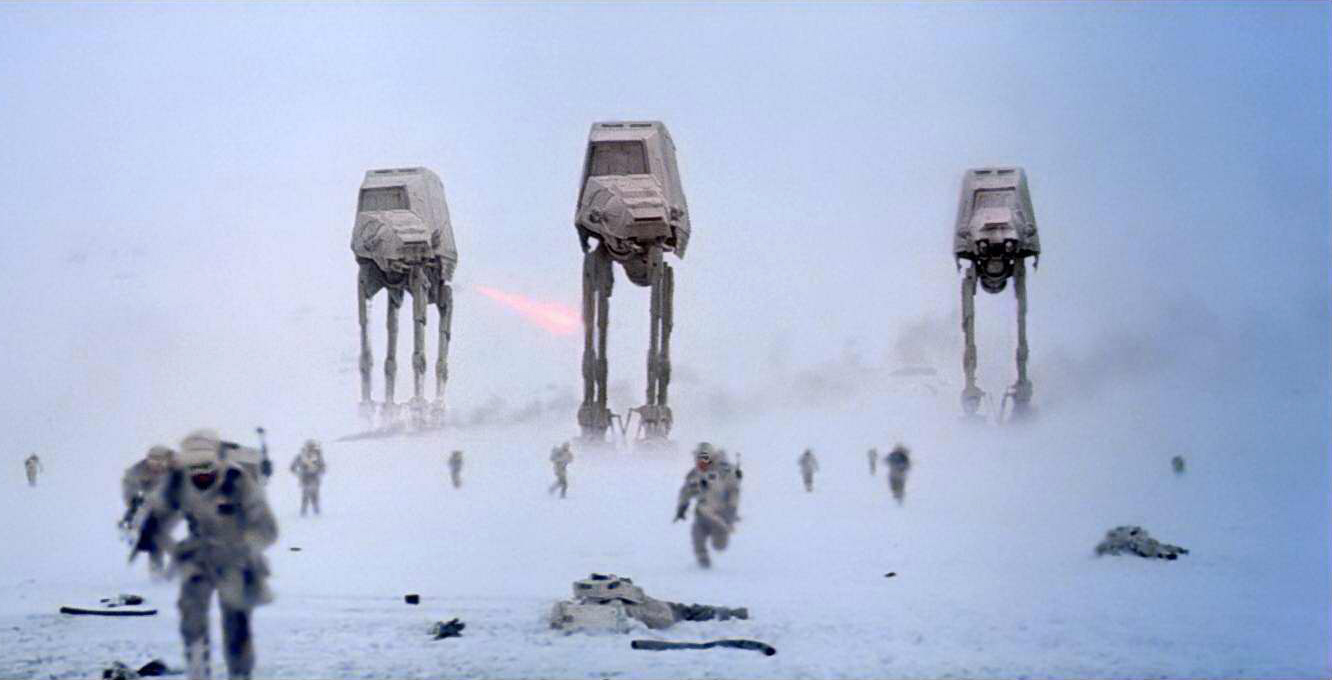
The Rebel extremists are outnumbered and technologically outlcassed.  The ground troops use World War 1 style trenches and fixed emplacements (which get destroyed quickly):


 And pack mules with people on them:


Unsurprisingly, they rely quite heavily on their outnumbered air and space forces.

Why it relates to Biddle
     The two sides here are easily analogous to Biddle's "Old Theories" and "New Theory."  The "Old Theories" that relate to victory and defeat in battle tend to overemphasize the roles played by numeric preponderance and technological superiority.  This ignores the dichotomy inherent in the "quality vs. quantity" argument, as there are tradeoffs that must be made in the procurement process.  Just to make things interesting, the Empire figured out a way to solve the apparent inconsistencies between quality and quantity, with a "get both" solution; after all, a military craft the size of a Galilean moon would certainly require both inordinate amounts of manpower and technological prowess.

     The "Old Theory"s reliance on technology and numerical preponderance to explain superiority in battle de-emphasizes the role of tactics and force employment on the tactical level, instead subscribing to the Dyadic Theory of technology (wherein the side with the better technology is better off and will likely win).  This is most clearly seen during various ground battle sequences throughout the movies.  In fact, the only real use of their ground technology involves lumbering slowly towards the enemy in a frontal assault using mechanized troops that have all the grace and maneuverability of elephants:


     The "New Theory" places far more emphasis on the role of Force Employment--a theory to which the Rebels certainly seem to ascribe.  The Rebels lost the winter battle of Hoth (pictured above), as they did not make use of Biddle's recommended defensive measures--hiding their defenses, using interlocking fields of fire, and defense in depth.  They did at least subscribe to the concepts of cover and concealment, dispersion, small-unit independent maneuver,  and combined-arms integration--which would have been great if they were on the offensive.  They did employ all of the above in their ground battle of the 3rd movie of the original trilogy (number 6, when fighting offensively on a forested moon around Endor), and won decisively.

     The Air and Space forces of the two sides show an even larger imbalance than those on the ground, and showcase even more why force employment matters.  As stated previously, the Empire has a space station the size of a small planet, that can blow up bigger planets.  The Rebels have a relatively small space flotilla with a number of small fighters.  The biggest thing the Rebels have that the Empire lacks is tactics and a thorough understanding of force employment.  Despite all the wonders of technology and obvious intergalactic numerical preponderance, the Empire still left a direct port from the exterior straight to some style of nuclear-powered core--a defect around which the Rebels planned an entire offensive operation.

     This is an oversight that the IAF would have loved during Operation Opera in 1981, when they bombed Iraq's nuclear reactor.  In any event, the outcomes were the same:


Why does it matter?
     The inevitable question.  Why go through a science fiction movie to attempt to explain military power theories of the real world?  Simple--an outgunned, out-manned force that is technologically outmatched can still fight and win if their underlying theories are correct.  The most obvious set of examples of such occurrences come from any number of Arab/Israeli conflicts from the 20th century, and a number of delightful summaries can be found in Kenneth M. Pollack's book Arabs at War: Military Effectiveness, 1948-1991.  Contained within the first 150 or so pages are a number of exposes regarding the performances of the Egyptian military in a number of wars against Israel during the latter half of the 20th century.  In a number of the conflicts, the Egyptian military possessed a preponderance of then-modern Soviet equipment that was technologically superior to the motley assortment possessed by the Israelis. However, the Israelis consistently beat back their Egyptian foes, in fight of odds that would be thought suicidal to any "Old Theory" adherents. 

     How were the Israelis able to consistently claim victory?  According to Biddle, any "New Theory" modern-system military will consistently come out victorious when faced up against a non-modern-system adversary, even if that adversary possesses the technological or numeric edge.  This plays out in any number of wars the Israelis have fought against their admittedly underwhelming neighbors.  

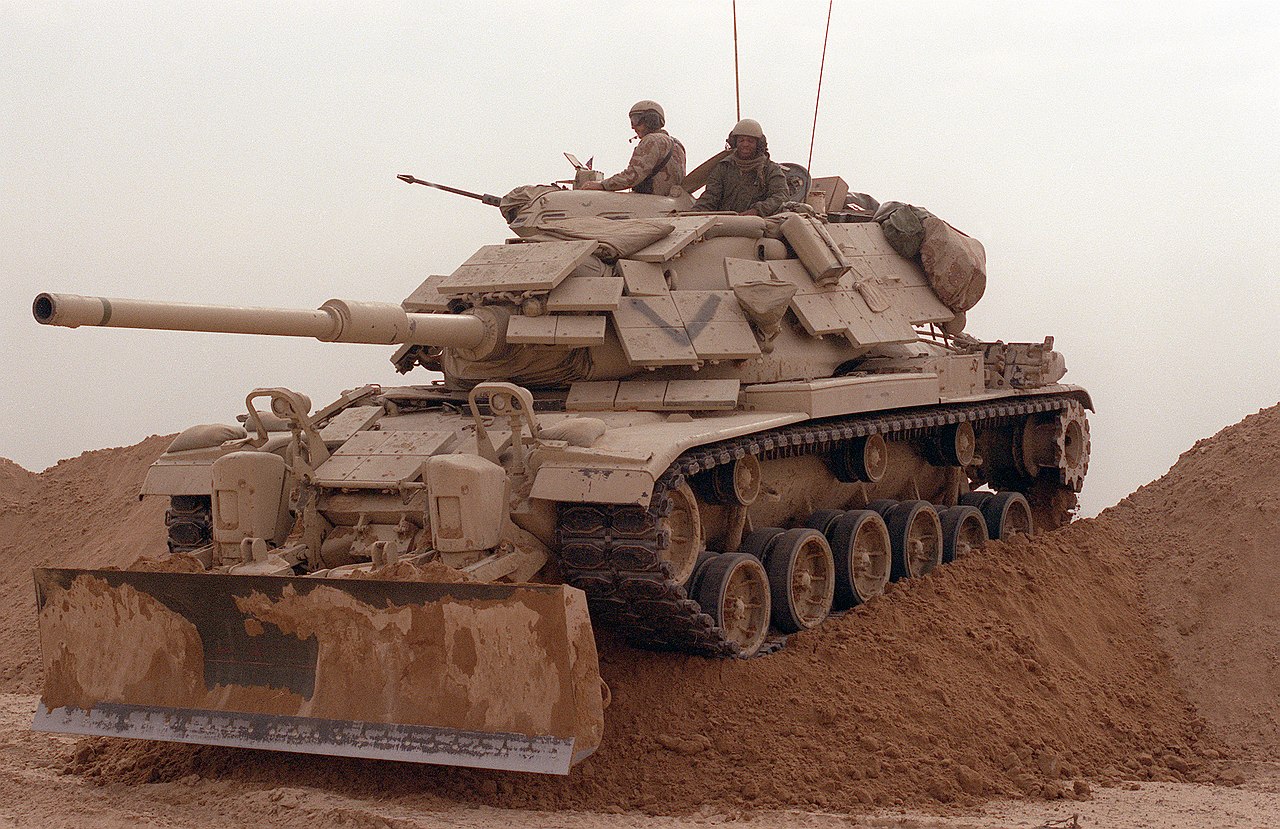
     Famously, this lop-sided match between the modern system and non-modern system played out in Gulf War 1 and Gulf War 2, prompting many to speculate that it was the cusp of a revolution in military affairs.  Biddle implies that the technological advancement demonstrated in the Gulf Wars is merely a result of the modern system's merging with the latest technology, rather than a full-scale revolution.  In Gulf War 1 there were USMC tankers plodding around in outdated M60 tanks rather than the newest M1 Abrams.  These armored columns were technologically outdated according to "Old Theory" adherents, and still dominated the battlefield because they had a better system of force employment.


While an reactive-armor plated M60 astride a dirt mound might not be as theatrically pleasing as snowbound pack mules, anachronistic trench warfare, and space battles culminating in an exploding moon-sized object, when viewed in the framework of Biddle's theories on Military Power, they can all do justice in showcasing the versatility and "galactic" truth of the primacy of force employment in the modern system.

Wednesday, May 01, 2013

The “Red Line” on Shifting Sand


       Outside of North Korea recently, few global topics have come close to receiving the amount of discussion that Syria has received amongst students of defense statecraft, especially concerning possible military action by the United States.  The controversy now centers on whether President Obama’s “Red Line” of Assad’s use of chemical weapons has been crossed.  Recent news has indicated that “U.S. intelligence agencies had concluded with varying degrees of confidence that sarin, a nerve agent, had been released in Syria.”   As reported by the L.A. Times, the specific wording of that statement and the even more vague language that followed today in a Presidential news conference, may be indicating that the Red Line is growing softer.  While the evidence is becoming clearer that a nerve agent was used, the President indicated that we do not know how it was used, that it could even have been used inadvertently.  Furthermore, he would seek harder evidence for the purpose of winning international condemnation of the action.  He pointed out that what was occurring in Syria is “a blemish on the international community generally,” not just to the United States. 
       More importantly, the President was clear that he never promised military action even if the “Red Line” were crossed.   In the news conference, he stated that the crossing of the Red Line would be a “game changer,” but shortly thereafter felt the need to make even that term more vague.  “By 'game changer,' I mean that we would have to rethink the range of options that are available to us," he clarified.   Perhaps the Assad regime will feel the pressure of our “rethinking.”   
       Honestly, the extreme caution seems sensible in such a serious situation and with so much at stake. I think even recent history shows the importance of that tact.   Regardless, the question is a legitimate one of whether hollow threats and the use of language that is more vague than it is clear serves any productive purpose whatsoever in Presidential discourse.  Some fear it could even be sending the wrong idea to other American  foes like North Korea or Iran.
 

Tuesday, April 30, 2013

Internationalization of a Defense Industry Service gone Overboard?


       In our Defense Statecraft class, we have talked at length over the last couple of weeks about the nature of the Defense Industry and the Defense Budget.  Integrated deeply within the discourse of the American defense industry is the concern of how much input international firms are providing to the United States.   From our class reading, it was shown that the United States has indeed been utilizing international input in our defense products and services for quite some time.  However , the goal was to keep the inputs to subcomponent levels and only use foreign parts or services if they could provide a cost savings or quality advantage while allowing the final product or service to maintain its American or Allied control.


AP Photo of Chinese Satellite Launch

       In a recent Danger Room report by Noah Shachtman, there was a shocking example of exactly the opposite of this “defense technology” outsourcing restraint.   Shachtman reports that the Pentagon has selected a Chinese satellite firm to help it communicate and carry and share data.  This, of course, is not only a foreign service of a potentially very delicate nature, it is not even a non-Allied country who is providing the service, it is Chinese firm.  Apparently the Pentagon is in such dire needs for bandwidth that this appeared to them to be an acceptable option.   In fact, a Deputy Assistant Secretary of Defense reported that the action was taken as a response to a need, not a strict adherence to policy since there is no policy in place to guide the decision.

       The decision to lease the data service raises serious concerns, not least of which is the fact that the United States has feared that Chinese telecommunication firms have acted as subcontractors for Chinese government spying.  Even if the data is encrypted, the Chinese know who is using which transponders, and they can then copy all of the data to send to Chinese cryptanalysts.  If that were not bad enough, the power to simply shut down service to the United States military in the area, is left in the hands of this Chinese firm.  It is certainly a bewildering and troubling choice by the Department of Defense.  It also illustrates just how important and space-capital intensive military networks are becoming.


After Very Close Cooperation in Mexico’s War on Drug Cartels, the United States is Unsure of What the Future Will Hold in that Cooperation


In a recent Washington Post article by Dana Priest, the deeply entwined nature of the United States support for the Mexican government and its military in combating the powerful Mexican drug cartels was examined.  The violence in Mexico had grown so large that former President Felipe Calderon had pleaded with President Bush for assistance.  This led to the beginning of The Mérida Initiative, a whopping $1.9 billion aid package for military training and equipment and judicial reform.  Beyond simple financial, equipment, and training aid, the cooperation between the two countries grew to include much more.  Priest writes that “the United States had been given near-complete entree to Mexico’s territory and the secrets of its citizens” in the counter-cartel operations.  The Calderon Administration had granted access to high-flying American spy planes as well as drones launched from U.S. bases.  The United States had further given tons of intelligence and spycraft technology to the Mexican authorities.
       Moreover, the DEA and the CIA and other United States agencies helped lead the hunt for the drug kingpins, utilizing some of the same methods that were ongoing in use against Al Qaeda in the Middle East.  The U.S. agencies established a physical infrastructure in various locations Mexico to aid in the planning of the raids, to vet the Mexican workers in the taskforce, and even hosted some Mexican authorities to train in Quantico.  The United States-led intelligence guided the overall operations.  During this disruption of drug-running routines, Mexican cities such as Ciudad Juarez became some of the most violent and dangerous cities on earth, with tens of thousands of murders occurring in very gruesome ways. 

       While the public has been unaware of just how intricately involved the United States has been in the Mexican operations, so too were officials from the new Enrique Peña Nieto Administration, who have been briefed over the last few months about the level of U.S. involvement.  There are clear indications that the new administration intends to take a different approach than the previous administration, seeking to reduce the violence on Mexican streets.  Some United States observers/participants fear this might mean leaning toward making deals with the remaining cartels, but this has been denied by the new administration officials.  Nevertheless, it is certain that some changes are coming.  The breadth and scope of those changes are yet to be seen.

Spring 2013 Final Exam

Diplomacy 750 Defense Statecraft
Spring 2013
Final Exam

Please answer one of the following three questions. Return your exam by e-mail by 5:45pm today.

  1.  With the end of the war in Iraq and the winding down of the war in Afghanistan, the U.S. Army is in search for mission and identity. How should the United States Army balance its responsibilities for conventional and unconventional warfare? 
  2. Some argue that AirSea Battle threatens to destabilize the Pacific, while others contend that it amounts to bureaucratic hot air. Discuss AirSea Battle in terms of U.S. grand strategy, the emerging politics of the Pacific Rim, and inter-organizational dynamics. 
  3. After a decade of growth, the U.S. defense budget has begun to retreat. Consider the domestic and international consequences of this retreat; how will a reduced U.S. defense profile affect the behavior of foreign countries (whether friend or foe)? What impact will defense cuts have in the U.S.?

Deterrence ambiguities in cyber-warfare

I previously mentioned some of the challenges of deterrence as a tool of statecraft when applied to conflict in space, namely the fact that strategically defensive but tactically aggressive states with modest technological capacity can cause no end of trouble. Cyberspace offers a different set of issues, mostly relating to the much lower entry costs for low-intensity cyber-activity which allow for non-state actors to seriously "play" in the cyber realm.

In a contest between major states traditional deterrence may in fact hold reasonably well. Huge budgets for cyber-security, and the apparent vulnerability of cyber-warfare personnel and physical assets to more traditional forms of surveillance and espionage, will likely improve the prospects for attributing cyber-attacks mounted by major world powers. As cyber-warfare inevitably becomes bureaucratized it would be rather strange if increasingly mature agencies failed to adopt certain "best-practices" that may improve managerial or fiscal efficiency but also reduce innovation and lend great-power cyber-operations distinct "signatures". At the same time the huge resources available to these relatively slow-moving government organizations will also allow them do deliver devastating punishment on a wide variety of targets. In this cyber deterrence apes nuclear deterrence, with great powers able to attribute attacks reasonably accurately and then respond in kind and on a massive scale. Given the relatively level degree to which many major states rely on digital technologies this suggests restrain in terms of cyber-attacks; cyber-espionage, conversely, will likely remain marginally acceptable due to the fact that such techniques are only moderately distinct from physically stealing memos, blueprints or for that matter hard-drives.

When great powers deal with less prominent states (much less non-state entities) the lack of a pronounced cyber "taboo" as seen with many other high-destruction weapons (poison gas, nuclear devices, etc) will likely lead the major states to adopt cyber-warfare into integrated war-fighting doctrine as applied to weaker opponents. At the same time these weaker opponents will either lack the need to maintain a wide array of infrastructure networks reliant on digital technology (non-state actors) or rule over states that either lack such technologies or can accept considerable widespread damage in the event of an attack (many small developing countries). Given the fact that the primary competitive advantage that major states hold over everyone else remains access to large-scale "kinetic" means of destruction (i.e. bombs) cyber-war doctrine in this realm will likely remain modest given the marginal improvements it can make for governments possessing precision weapons, air superiority, orbital assets and special operations forces. Only when great powers see kinetic operations as unacceptable, as the US currently does with Iran, will attacks such as Stuxnet occur.

Small states or non-state groups, however, will increasingly find cyber-operations critical to their strategies for fighting against major powers, or deterring such conflict in the first place. The costs of developing cyber-weapons is unlikely to reach the level of precision-weapons, advanced air and sea vehicles, space-travel, or nuclear weaponry, all of which require enormous industrial infrastructure and in some cases can lead to serious diplomatic problems. Conversely software industries have relatively low capital requirements and raise no serious international questions about weaponization. As a result recruiting software and electrical engineers remains much simpler than getting nuclear physicists familiar with weapons development or aerospace engineers knowledgeable about stealth technologies. Coupled with the hypothetical capacity of cyber-weapons to wreak havoc on great-power military networks or even civilian infrastructure such tools become extremely useful to relatively weak states attempting to deal with powerful external threats. Against each other, however, weak states or non-state groups will likely use more conventional weapons due to mutual resistance to cyber-attack and vulnerability to more traditional weapons.

Cyber-deterrence will remain deeply problematic due to the difficulty of reliably tracing incoming cyber-attacks. Nonetheless the risks of retaliation in kind will likely keep major powers from attacking each other on a large scale in the absence of more general warfare, especially since standardization of cyber-operations will likely make such attacks easier to trace. Major powers moreover will see little reason to use cyber-weapons except when more overt warfare remains unacceptable. Small states or non-state actors, however, will find the low cost of entry and possibly very high rate of return from cyber-activity against more powerful foes to be very interesting indeed.

Deserters no longer welcome in Canada


Our friendly neighbors to the North have become decidedly less hospitable to American deserters.

A refuge for war resisters and draft dodgers during the Vietnam War, as many as 90,000 Americans crossed the border to seek refuge. Many were given permanent residence (which could lead to Canadian citizenship), though the majority returned Stateside after President Carter granted them amnesty in the late 1970s.

Since then, there have been an estimated 200 Iraq War resisters residing in Canada. In 2009 the House of Commons passed a motion that would allow for U.S. military deserters to stay on compassionate grounds, but the Conservative government did not agree. As a result, the Canadian government has deported several American war resisters this year.

One such deportee is Kimberly Rivera, the first female resister of the Iraq War.

Rivera, a 30-year-old Texas native, served three months in Iraq with the US Army before becoming disillusioned with what she saw there. As a result, she moved to Canada in 2007 during a two-month leave after being ordered to complete a second tour. In 2009 she was ordered to leave or face deportation, but she appealed the decision. However, this fall she was denied permanent citizenship on compassionate grounds. She turned herself in at the border crossing near Alexandria Bay in New York and was immediately taken into military custody.

On Monday she pleaded guilty to two counts of desertion and received a bad-conduct discharge. She will serve ten months in prison as a result. Two other deportees, Robin Long and Clifford Cornell, also face jail time.

Several rallies were held in Canada protesting Rivera's deportation and she received support from around the globe, including from Archbishop Desmond Tutu.

The Canadian government defends their decision, claiming that the circumstances have changed now that joining the U.S. armed forces is a voluntary decision. If the Canadians won't keep them, is anywhere safe for American deserters to stay?

Repatriating British Drones


Saturday marked the first nationwide protest of Britain's drone use. About 400 protesters took part in a march from Lincoln to the Royal Air Force Base at Waddington in Lincolnshire. This historic event was prompted by the British Ministry of Defense admitting that they had flown armed drones remotely from the UK.

Previously operated from Creech Air Force Base in Nevada, the RAF has decided to bring their operations back to the UK in order to take advantage of the opportunity to have shifts in multiple time zones.

So far, Britain is the only other nation the U.S. has permitted to purchase armed MQ-9 Reaper drones.
Though primarily used for surveillance, these models can be armed with Hellfire missiles and 500 lb laser-guided bombs.

Despite protests from activist groups claiming that the use of UAVs makes it all too easy for policymakers to launch attacks without oversight or accountability to the public, the RAF stands firm in their statement that the Reapers "adhere strictly to the same laws of armed conflict and are bound by the same clearly defined rules of engagement."

The RAF says that another benefit of repatriating the British-owned and operated drones will allow for greater control over their use. Previously, British pilots had been embedded with the US Air Force (British pilots are still required to follow the UK rules of engagement even whilst embedded in the US armed forces). 

While good for allied relations, this collaboration muddles the issue of responsibility for specific strikes. For example, British pilots are given credit for firing missiles even when using borrowed US drones, however any casualties resulting from these strikes have counted towards the US figures. This has skewed the data and analysts are still in the process of sorting it all out. Hopefully the added separation of British forces operating from the UK will help to clarify the issue.

Week 9: Nuclear Weapons


Nuclear Neurosis vs. Nuclear Laxity

            In his book, Atomic Obsession: Nuclear Alarmism from Hiroshima to Al-Qaeda, John Mueller proposes that we live in a kind of irrational nuclear mania, ever fearing that terrorists will access nuclear weapons, or that the world will end in a nuclear induced holocaust that will leave only vermin to populate what little may be left of our planet. Mueller explains why he believes terrorists are unlikely to procure nuclear weapons, and that this nuclear phobia drives us to make policies and set budgetary priorities that do not mesh with reality. Instead of examining the facts regarding practical nuclear capabilities, we indulge in an almost frantic awe of the power of these magical, mystical scientific innovations. Playing up their capabilities may be beneficial for the purposed of deterrence, for those who are believers in deterrence theory, but for those who prefer to calmly examine reality in an effort to more reasonably plan according to a set of plausibly likely scenarios, it may be preferable to consider things less zealously. By no means is this meant to take the fun out of science, or even to undermine the considerable and formidable power of nuclear weapons; rather, it is meant to serve as smelling salts to the fainting damsel we've all become under the potent nuclear spell. We need to come fully to our senses and measure nuclear capabilities and our response to them as detached, objective observers.


            According to Mueller, from the time the United States loosed "Little Boy" on Hiroshima, the world has lived in dread at the prospect of nuclear annihilation. He argues that this obsession has no basis in logic or scientific fact, going so far as to state that nuclear weapons have had relatively little impact on history. While this last claim makes a departure from hard logic and measurable reality, his point about our obsession with nuclear weapons being unfounded is reasonable, and more importantly, difficult to argue well against. It is true that nuclear weapons have proven to be more or less militarily useless in a literal sense, since there are few tactical application for them. But, if deterrence theory is admitted into the discussion, then there is a reasonable argument that these weapons are in constant use as a sort of invisible force field protecting the possessor from aggression. This discussion become dizzying once it moves into the implications for proliferation, but the proposal that nukes can be said to effectively deter nuclear aggression from other armed parties, when mutual destruction is assured, is at least logically reasonable. So, this is the key point where Mueller leaves himself most exposed to criticism, as it is difficult to defend the position that nukes have had little effect on recent history.


            Paul Bracken, on the other hand, cautions in his book The Second Nuclear Age: Strategy, Danger, and the New Power Politics that we are too lax in our dealings with the nuclear phenomenon. He posits that the end of the Cold War ushered in a lackadaisical underestimation of the threat of nuclear weapons, and that the current situations with Iran and North Korea have introduced a second nuclear age. He further explains that the use of these weapons for political prestige has given them added value to countries that want to be recognized among the nuclear elite.


"YOU'RE GOING TO DIE!!!!!"


            Bracken argues that, with more countries developing nuclear capabilities, we need to more conscientiously track and evaluate how nuclear weapons are affecting international crises. He is quite concerned that we are in an acutely critical situation that will almost certainly lead to nuclear armed terrorists. While he makes excellent points about carefully calculating scenarios in order to prepare for them, he does convey a sort of hyper-vigilance regarding escalation of the nuclear situation. It would be a (perhaps fatal) mistake to grow too lax in our policies and preparations, but equally irrational and detrimental is the prospect of remaining on too high an alert, which could actually serve as a self-fulfilling prophecy by leading other nations to suspect that they had better start nuclear programs to protect themselves from the dangers we are so anxiously perceiving. In fact, Bracken laments that the current role of nuclear weapons in the Middle East, South Asia, and East Asia will make them impossible to eliminate. As a solution, he proposes that we must devise innovative methods for dealing with conflict in the Middle East (primarily due to Iran) and Asia (primarily due to North Korea), as he believes these conflicts are likely to result in nuclear escalation and further proliferation.


            While Mueller and Bracken clearly see things differently, they do seem to agree that we must explore more effective ways to manage the nuclear problem, and that the best way to go about this it to innovate a new global system of arms control that is more likely to inspire a consensus among states that agree on precious few aspects of the nuclear topic.